
What to Prepare Before Hiring a Course-Build Team
Organize your teaching files, learner journey, platform details, and review decisions before your first course-build conversation.

Before hiring a course-build team, gather your existing teaching files, describe the learners and outcome, list your current systems, and decide who will approve the work. You do not need every lesson finished. You do need a clear view of what is ready, what needs revision, and what the team is being asked to build.
For a healthcare practitioner who already teaches workshops or webinars, much of the starting material may already exist. A useful brief connects that material to the experience you want learners to have online.
This course-build preparation checklist will help you organize a first conversation and identify the decisions that belong in a written scope.
1. Describe one program and the people it serves

Start with the teaching you want to bring online first. Write a short paragraph that answers three questions: Who is this for? What knowledge do they bring? What should they be able to do with the material afterward?
“An online library for everyone interested in our work” leaves many decisions open. A more usable starting point is a defined program for a particular group, with an agreed route through the material.
For example, an educator might propose an orientation lesson, three topic lessons, a downloadable planning worksheet, and a live discussion. That is an illustrative structure, not a recommended course length or a promise about what any package includes.
If you are still choosing between self-paced delivery and a live component, note that as an open decision. The course, membership, and cohort guide can help frame that discussion.
2. Make an inventory of the teaching you already have

Gather the current slide decks, handouts, recordings, exercises, and reading lists for this program. Use one shared inventory so the builder can distinguish finished material from reference files and earlier versions.
Include file location, condition, and the person responsible for review. Mark material that needs a new introduction, clearer instructions, an updated example, or a replacement recording. Identify any assets whose permission to reuse still needs confirmation. Keep patient information and confidential records out of the build package.
Here is a fictional handoff table you can adapt:
| Item | Current condition | Review owner | Decision before build |
|---|---|---|---|
| Workshop slides | Latest teaching version; two event-specific slides | Educator | Remove event details and approve the sequence |
| Session recording | Contains breaks and participant discussion | Educator | Identify approved segments and any replacement recording |
| Learner worksheet | Editable document available | Educator | Confirm instructions work without a live explanation |
| Reading list | Links have not been checked recently | Assigned content reviewer | Check links and approve what learners should receive |
| Welcome message | Not written | Program owner | State where to log in, how to start, and where to ask for help |
| Completion requirements | Discussed but not documented | Program owner | Specify what must happen and who checks it |
The purpose is to make gaps visible. An unfinished item can be scoped and assigned; an unknown item is harder to plan around.
3. Sketch the learner's route from enrollment to completion

Write the steps a new learner should follow. Include registration, payment if applicable, confirmation, first login, lessons, resources, support, and the final activity.
Then record the access decisions: when access starts, how long it lasts, whether lessons open together or in stages, and what happens if someone needs help getting in. If the program has a live session, identify where learners find the joining instructions and any replay.
You can bring a simple list rather than a finished process diagram. The team needs enough detail to identify the pages, messages, platform settings, and test cases involved.
If a certificate is part of your program, document the client-approved wording and release conditions. Mark unresolved recognition or professional requirements for the appropriate program owner to address. Preceptor Digital Solutions configures delivery around approved requirements; accreditation and professional paperwork are outside its services.
4. List the systems the build must connect

Include your website, learning platform or member area, email system, registration forms, payment setup, video hosting, and any existing integrations. Record whether each should stay, change, or be evaluated.
At this stage, system names and a description of their role are useful. Keep passwords out of the brief. When the project is agreed, arrange appropriate access through each system's supported account or invitation process.
For an existing program, flag anything that must be preserved: learner accounts, content, access dates, links, payment arrangements, or completion records. These requirements affect the work and need checking against the actual platforms before a migration is promised.
5. Assign review responsibilities and a workable review window

Name the person who can approve teaching content, platform behavior, learner communications, and the final launch. One person may cover several roles, but the ownership should be explicit.
Agree how comments will be collected and who resolves conflicting feedback. A single consolidated review is easier to act on than separate messages about different versions of the same lesson.
Share any fixed event date or intended launch window, along with the time you can reserve for reviews and missing recordings. A delivery date belongs in the agreed scope after the team has assessed the material and dependencies.
6. Ask for a scope that names the work
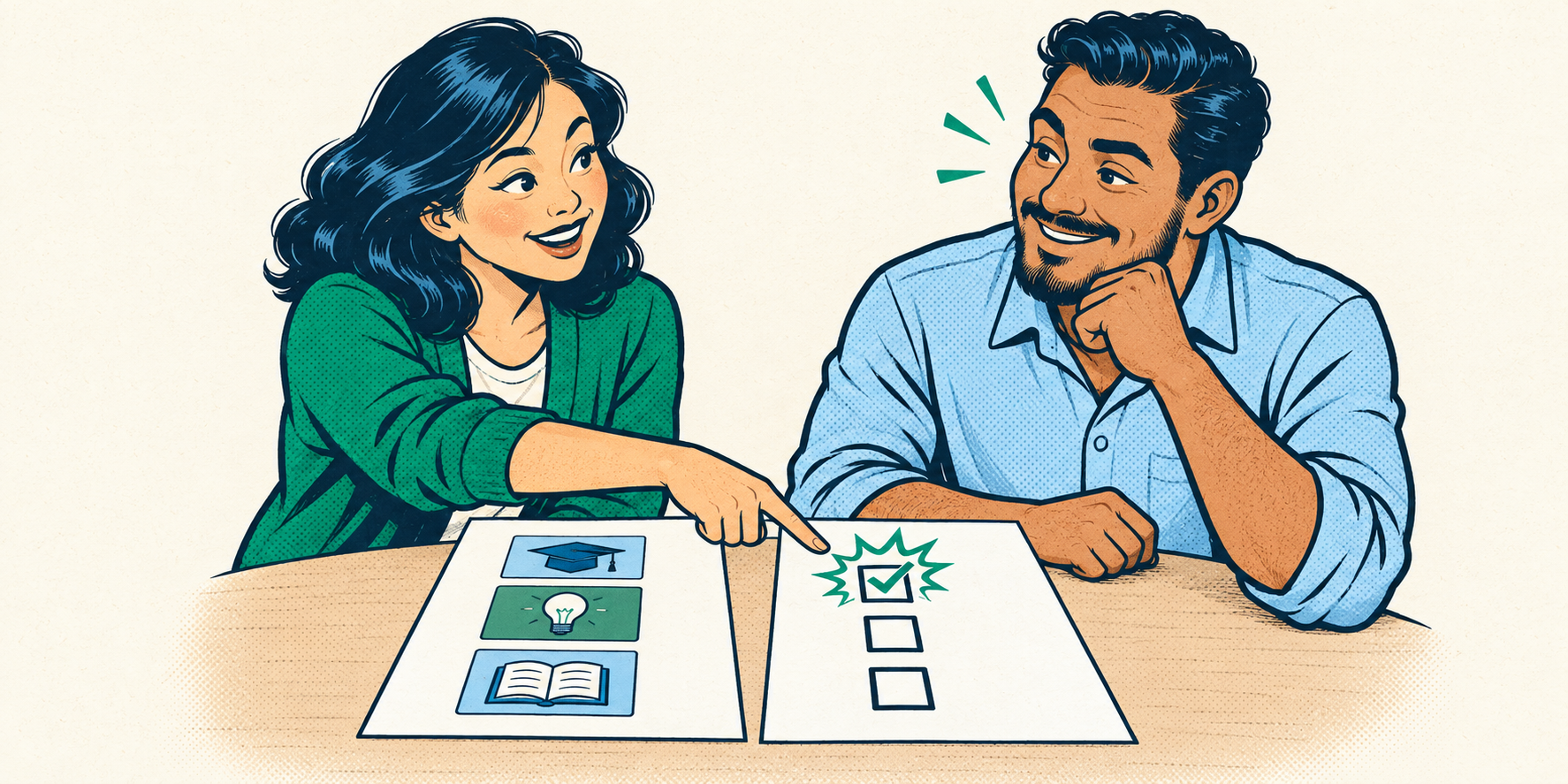
A proposal should make the deliverables understandable. Ask which lessons, pages, messages, access rules, integrations, and review rounds are included. Clarify whether editing, transcription, caption work, migration, or ongoing support is part of the engagement or needs separate scoping.
Ask how the completed build will be checked and what you receive at handover. Useful questions include:
- What must I supply before each stage can begin?
- Which decisions could change the price or schedule?
- How will we test the experience using a learner account?
- Who handles updates and support after launch?
The answers help you compare proposals against your actual program rather than against a broad promise to “build a course.”
Questions educators often ask

Do I need to record every lesson before speaking with a builder?
No. Bring the material you have and identify the missing pieces. The team can help assess the build while you decide what needs recording. Confirm whether recording support or editing is included before assuming it is part of the service.
Can I use an existing webinar recording?
A recording can be part of the source material. Review which sections stand alone, which depend on live interaction, and which need updated context or replacement. Mark the portions approved for learner access before the build proceeds.
What if I already have a course platform?
Include it in the brief and describe the problem you want to solve. An existing platform may need clearer organization, different access rules, or connected communications. Evaluate those requirements before deciding whether a move is necessary.
What should I bring to the first planning conversation?
Bring your learner description, teaching inventory, rough learner route, current system list, and open decisions. Add one person who can approve the project and an honest view of the review time available.
Bring your teaching and a clear starting point

Your preparation does not have to be elaborate. A useful inventory and a short list of decisions give a course-build team a concrete starting point for scope and discussion.
Explore Preceptor Digital Solutions's online course builds, then Work with us. Bring the workshop you already teach and the questions you want the build to resolve.